Montréal Laboratory
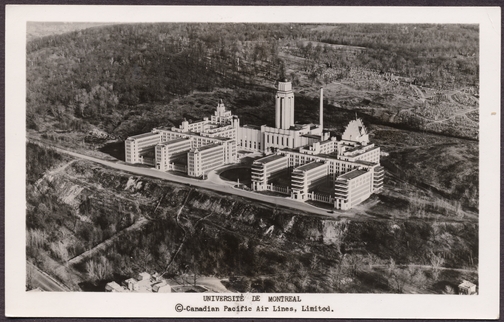
Montréal, Quebec
Historical Context
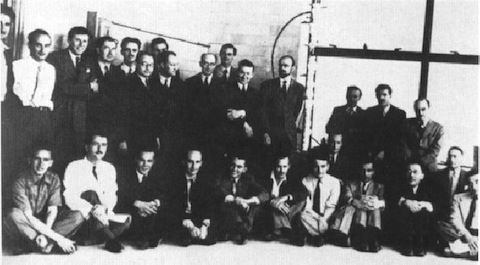
"Okay let's go." With three simple words, the Minister of Canada's Wartime Department of Munitions and Supply, C.D. Howe, gave the famous go-ahead that entered Canada into the nuclear age. The Montréal Laboratory, setup in 1942 in a collaboration between Canadian and British scientists, established Canada's first Nuclear Research facility in Montréal, Quebec. Montréal Laboratory's research initially began in an old McGill University residence, but only three months later was moved to a new, larger building at the University of Montréal. The photo below shows some of Montréal Laboratory's initial researchers.
Controversy at Montréal Laboratory
Montréal Laboratory began with success, quickly making significant progress. The laboratory's staff, about half being Canadian, quickly grew to include over three hundred employees. Unfortunately, the staff became frustrated with the lack of cooperation with American scientists, as well as the German born Laboratory director, Hans von Halban, who the Americans saw as a security risk, due to his German heritage, although being of Austrian- Jewish heritage. As a result, the exchange of information between the Montréal Laboratory and the American scientists became much more restricted.
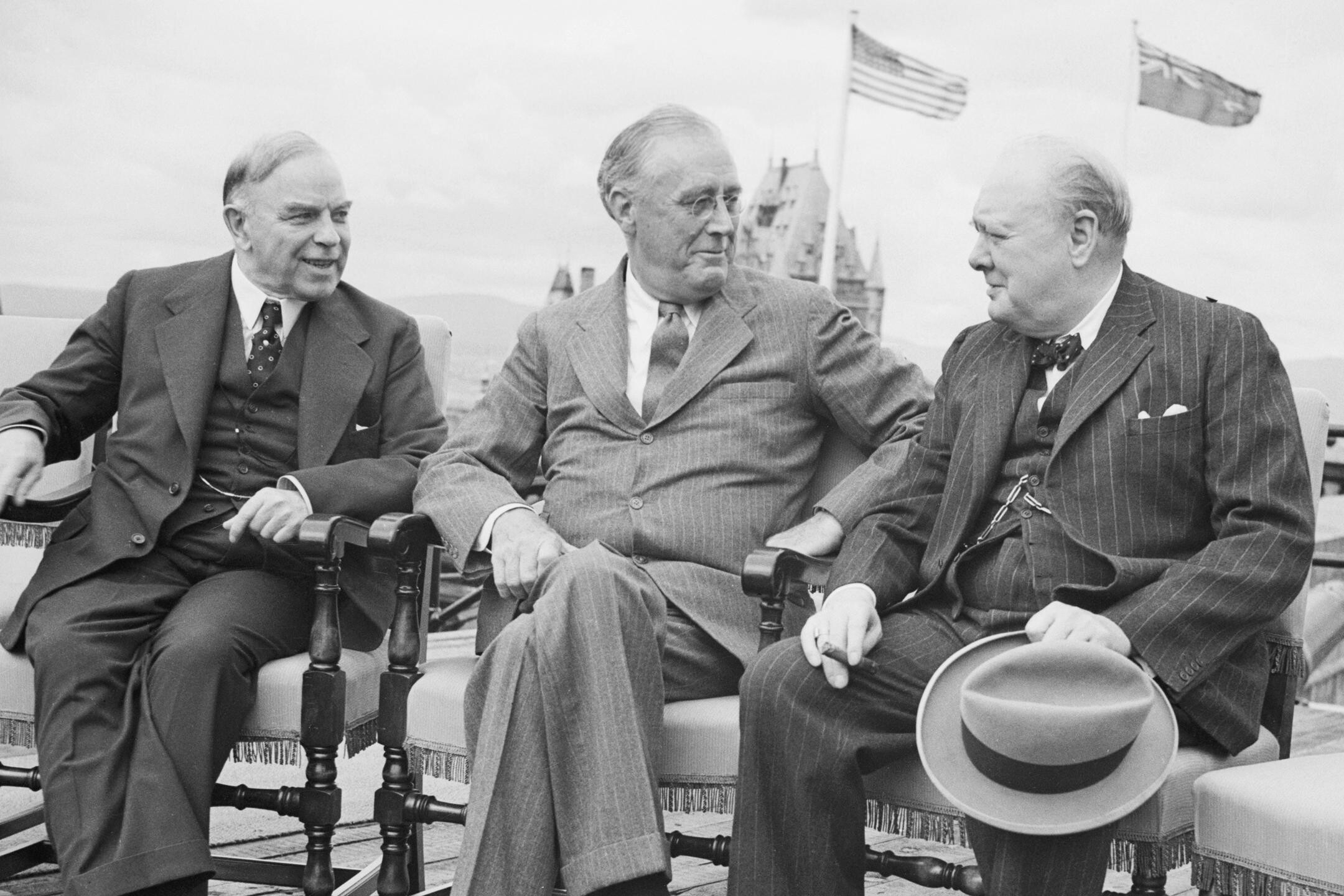
A year after the Montréal Laboratory was established, Winston Churchill, Mackenzie King, and Franklin D. Roosevelt met in Quebec to discuss the unsatisfactory collaboration between British and American scientists in their work on Nuclear research, including their work at the Montréal Laboratory. The two agreed that the two countries should make every effort to work together to bring the project to "full fruition". As such, a "Combined Policy Committee" was established to implement this agreement. This meeting became known as the "Quebec Agreement", setting out the terms that would later define Canada's role in the Manhattan project.
Wartime Nuclear Impact
Canada's involvement in Nuclear Research was established with the founding of the Montréal Laboratory. The group of over 300 scientiests, engineers, and technicians made quick progress, investigating the feasibility of using natural uranium and heavy water in a nuclear reactor. Montréal Laboratory's heavy water came directly from Cominco, an American contracted heavy water plant located in Trial, British Columbia, and as such, had to rely on the often uncooperative Americans in order to continue research. As a result, the Montréal Laboratory had come to a near stand-still by 1943, leading to the Quebec Agreement discussed above.
Lasting Impact
Following the Quebec Agreement, Canada developed the Montréal Laboratory's predecessor, the Chalk River Laboratories. Developed in 1944 in Deep River, Ontario, The Chalk River Laboratories were developed in a much less residential area, allowing for the wartime secrecy that was required for Canada's involvement in nuclear weapons research.
References
Atomic Heritage Canada. Accessed March 30th, 2016. Atomic Heritage Foundation
Canadian Nuclear Safety Commission Canada's historical role in developing nuclear weapons. Accessed March 30th, 2016. Canada's Role in Developing Nuclear Weapons
Canadian Nuclear Society Early Years of Nuclear Energy Research in Canada. Accessed April 4th . Canada's Early Years of Nuclear Invovlement
 Carleton University History Department